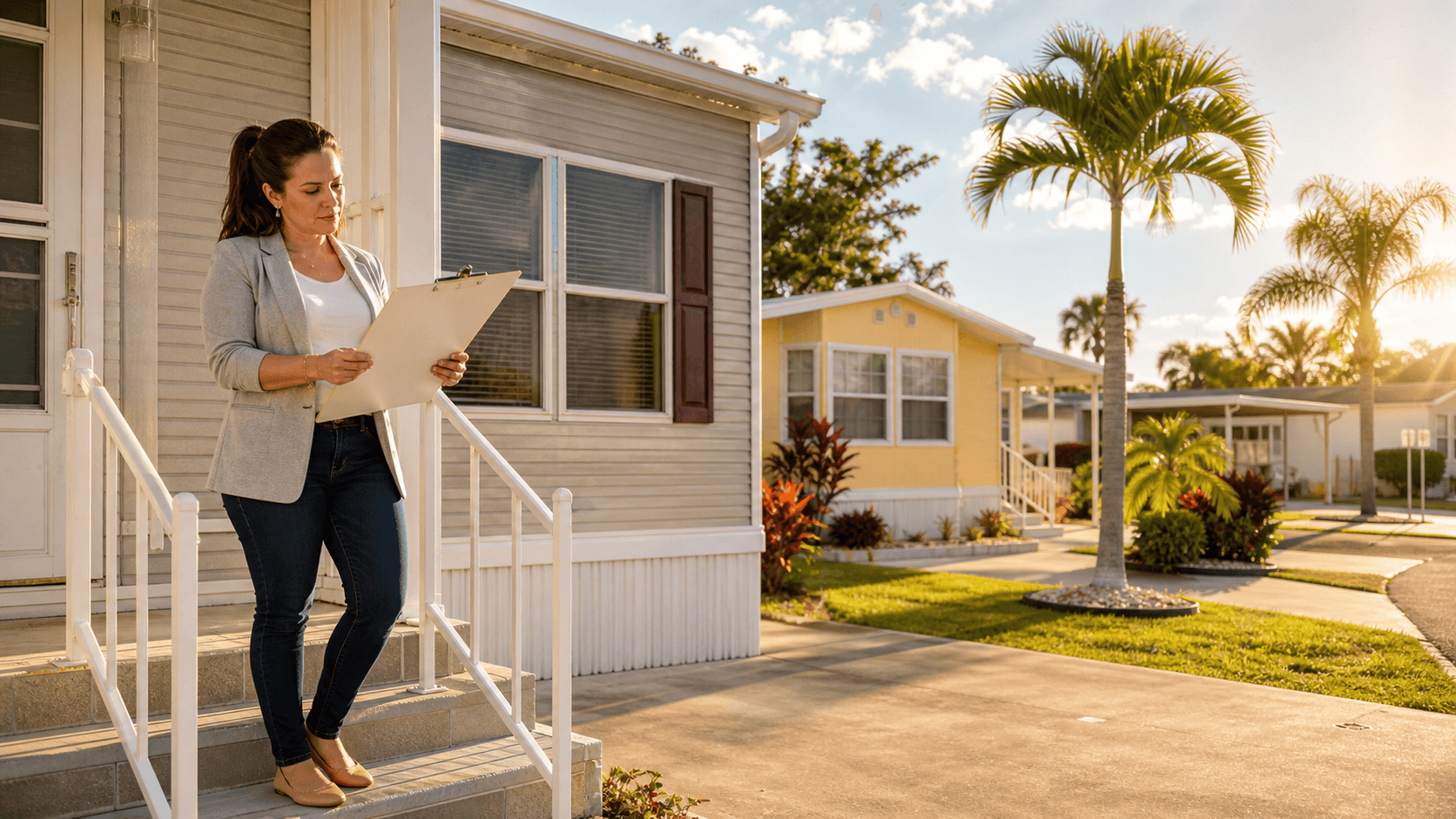
Understanding Tampa Manufactured Home Loan Property Rules
By Ryan Kearns, NMLS 1826973
Tampa-area buyers considering a manufactured home, with or without land, and homeowners reviewing financing choices should start with the property itself. Manufactured home loans in Tampa depend heavily on how the home was built, titled, installed, insured, and connected to the land.
A manufactured home is a factory-built dwelling constructed on a permanent chassis and built to the federal HUD Manufactured Home Construction and Safety Standards, commonly called the HUD Code. It is transported to its site in one or more sections. A modular home is also factory-built, but it is generally constructed to applicable state or local building codes rather than the HUD Code. Transportation alone does not make a home a manufactured home. Its property status can affect loan choices, appraisal review, closing documents, and whether it may be financed as real property or personal property. We serve eligible borrowers in Hillsborough, Pinellas, Pasco, Polk, Manatee, Hernando, and Orange counties, but this information is educational and does not promise approval or program availability.
Property Rules Shape Your Financing Choices
Before financing can be reviewed, we need a clear picture of the home and its site. A home that is permanently installed on land you own may be reviewed differently than a home in a land-lease community, where you own the home but rent the lot.
Property records matter because they help show what is being financed. The appraisal may need to address the home's features, condition, location, and connection to the land. Title documents, installation records, permits, and insurance details can also shape the process.
The goal is not to guess whether a property will fit a loan program. It is to identify the questions early, before they become closing-day surprises.
Start with the Home, Land, and Title Status
A HUD-code manufactured home and a modular home are not the same thing. HUD-code manufactured homes are built on permanent chassis under federal HUD standards. Modular homes are generally built to applicable state or local building codes. That difference can affect the records we review, the appraisal approach, and the available financing paths.
Land ownership is another major point. If you own both the home and the land, the financing structure may be different from a home located in a community with a site lease. Title status also matters. In some situations, the home may be titled separately from the land. In others, the records may support treatment as real property. Florida rules and county procedures can affect how those records are handled.
Depending on the property, documents for review may include:
- Home identification information and title history
- Land ownership records or community lease documents
- Installation records, permits, or inspection reports
- Engineering reports when required for the loan review
- Insurance information and property-tax records
Not every transaction requires every item. Still, gathering the available paperwork early can make it easier to understand what needs further review.
How Loan Programs Review the Property
FHA, VA, USDA, conventional, and Non-QM financing do not use one shared set of manufactured-home standards. Eligibility depends on borrower profile, property type, and program guidelines.
FHA property requirements come from FHA guidance. For FHA-insured financing, a manufactured home generally must meet HUD Code requirements, be attached to a permanent foundation, be treated as real property, and be the borrower's principal residence. FHA's Single Family Housing Policy Handbook contains the applicable property requirements.
VA requirements come from separate VA guidance. A manufactured home financed with a VA-guaranteed loan must generally be permanently affixed, classified as real property, and secured with the land. VA occupancy and property requirements are addressed in the VA Lenders Handbook property guidance. A borrower exploring a VA home loan should not assume that FHA or conventional manufactured-home rules apply.
USDA uses its own USDA Single Family Housing Guaranteed Loan Program handbook guidance. Current USDA guaranteed-loan guidance permits eligible new and existing manufactured homes. New units must meet the program's new-unit requirements. Existing units generally must have been manufactured within 20 years of closing, must not have been previously installed at another homesite, and must meet the program's foundation, HUD-label and data-plate, size, modification, site, title, and other requirements.
Conventional manufactured-home financing is governed by the applicable enterprise guidance rather than one uniform conventional standard. For example, Fannie Mae requires eligible manufactured homes to meet specified HUD Code, real-property, foundation, size, and occupancy requirements in its manufactured-housing guidance. Freddie Mac has separate requirements in its Guide. A borrower exploring a conventional home loan may need to meet property rules that differ from a buyer using FHA, VA, or USDA financing.
Lenders can add requirements that are more restrictive than agency or enterprise guidance. These lender overlays may address property condition, title treatment, land-lease terms, foundation documentation, appraisal support, or available loan products.
Non-QM financing does not follow a single FHA, VA, USDA, Fannie Mae, or Freddie Mac manufactured-home standard. Non-QM eligibility, documentation, occupancy rules, and property restrictions are lender- and product-specific. A lender's current product requirements, rather than a general Non-QM label, determine whether a particular manufactured home may be considered.
USDA review deserves special care. You cannot assume USDA property eligibility from a Tampa address, ZIP code, city, or county. The specific property address must be checked through the official USDA eligibility map. Even if a location appears eligible, borrower and loan requirements still apply.
Costs, Insurance, and Ongoing Risk
The loan is only one part of the financial picture. Buying or refinancing a manufactured home may involve appraisal work, title services, inspections, installation verification, land-related work, permits, taxes, insurance, association obligations, or land-lease charges.
Cash to close is the verified amount a buyer must bring to closing after permitted credits, deposits, and funds already paid are accounted for. It is not the same thing as every closing cost or other upfront expense connected to a purchase.
Before moving ahead, we recommend asking practical questions about the property's ongoing responsibilities:
- Is the home's insurance appropriate for its location and condition?
- Does flood-zone information need further review?
- Are there community rules, lease terms, or association obligations?
- Has the home's condition been reviewed for maintenance needs?
- Are permits and installation records available when needed?
It is wise to verify current permitting, inspection, insurance, and property-condition requirements instead of relying on old paperwork or assumptions.
Clarify Your Property And Loan Questions
Call or text our office line at 813-796-5755 to discuss how property classification, title status, foundation requirements, and appraisal considerations may affect your manufactured-home financing options.
Questions to Resolve Before You Apply
Is a manufactured home the same as a modular home?
No. A manufactured home is built on a permanent chassis under the federal HUD Code. A modular home is generally built to applicable state or local building codes. They are built under different standards, and the documentation may differ. That can affect the appraisal and financing review.
Can you finance a home in a land-lease community?
Possibly, but it depends on the loan program, the lease terms, the home's classification, lender requirements, and the specific community. A community's name or location does not establish eligibility.
Does your county determine USDA eligibility?
No. County or city location alone is not enough. The specific property address must be checked on the official USDA map, and borrower eligibility rules also apply. A careful property review should happen before you rely on any financing assumption.
Kearns Mortgage Team, LLC, NMLS 2177472. Ryan Kearns, NMLS 1826973. All loans are subject to credit approval. This is not a commitment to lend. Terms and conditions may apply and are subject to change without notice. Programs, rates, and eligibility subject to underwriting approval and availability. Equal Housing Opportunity.