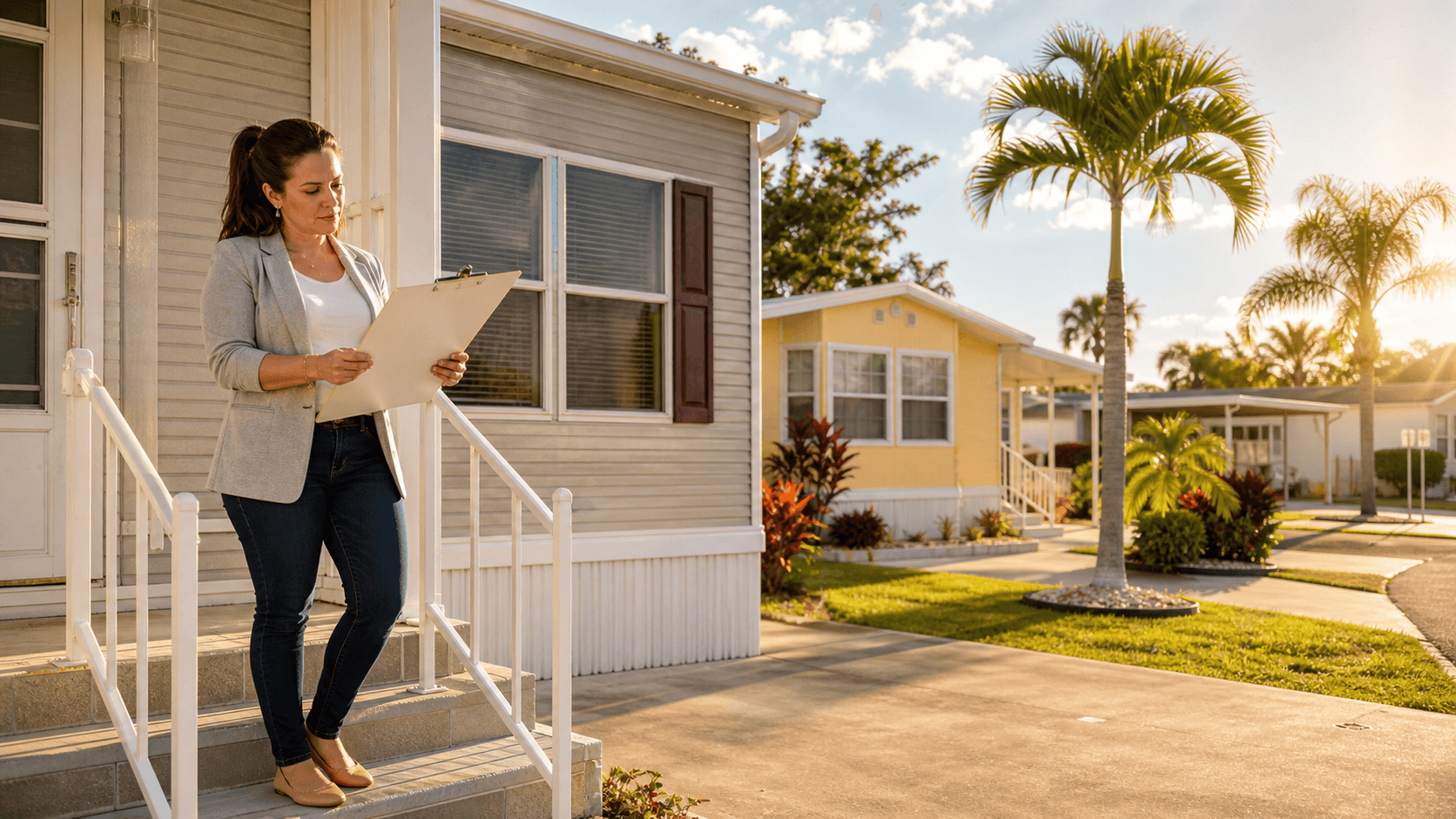
Inside Tampa Manufactured Home Loans: Land, Title, and Loan Fit
By Ryan Kearns, NMLS 1826973
If you are considering a manufactured home in Tampa, this guide explains how land, title, and home type can shape the financing review.
Start with the Land, Title, and Home Type
For manufactured home loans in Tampa, loan fit usually starts with three connected questions: what kind of home it is, whether you own the land, and how the home is titled or recorded. A manufactured home is built to the federal HUD Code. A modular home is generally built to applicable state or local building codes. Those terms are not interchangeable, and neither term refers to an older mobile home.
The same home can raise very different questions depending on its setup. A home on land you own, a home in a leased-land community, and a home with an unresolved title record may each require a different review. We serve borrowers in Hillsborough, Pinellas, Pasco, Polk, Manatee, Hernando, and Orange counties, but location is only one part of eligibility. The home, parcel, records, and financing guidelines all need to fit together.
Identify the Home Before Comparing Options
Before we discuss financing, we recommend gathering the records that identify the home clearly. These details help the lender, appraiser, title professional, and insurance provider review the correct property.
- HUD certification label information
- Data plate details, year built, manufacturer, and serial number
- Current title record and ownership information
- Available installation, foundation, or permanent-attachment documents
A manufactured home, older mobile home, and modular home can be reviewed under different property standards. Program and lender requirements may depend on construction standards, intended occupancy, condition, title status, and the property's foundation.
Record issues deserve attention early. Missing labels, incomplete title paperwork, conflicting ownership information, or changes in the land arrangement that were not recorded can require further review. A replacement document, correction, or inspection may help clarify a concern, but it does not automatically resolve every financing issue.
How Land, Title, and Affixation Affect Loan Fit
Owning both the home and land can present different financing paths than buying only the home or placing it in a land-lease community. With leased land, we need to consider the lease, community rules, property records, and the requirements of the program under review.
In Florida, the way a manufactured or mobile home is treated, whether as personal property or real property, may affect financing, taxes, title work, and lien review. The process is fact-specific, so we look to current Florida statutory guidance and Florida Highway Safety and Motor Vehicles mobile-home rules rather than treating every property the same way.
Permanent attachment to land may matter, but it does not by itself establish eligibility. We encourage you to confirm the legal description, ownership records, liens, recorded documents, and available foundation or installation records with the appropriate professionals.
Match Loan Programs to the Property
Conventional, FHA, VA, USDA, and Non-QM financing are separate categories, not interchangeable solutions. Eligibility depends on borrower profile, property type, and program guidelines.
When applicable, conventional financing may follow conventional home loan requirements tied to Fannie Mae or Freddie Mac guidance, along with lender overlays. FHA, VA, and USDA each have their own occupancy, property, borrower, and documentation rules. VA guidance may apply to eligible borrowers considering a VA home loan, while USDA location eligibility must be verified. A city, ZIP code, or county alone does not establish USDA eligibility.
Non-QM lending is a separate category that may use different underwriting standards and property requirements, subject to lender availability and review. It is not a workaround for title, land, appraisal, or property-condition concerns. Some homes and land arrangements may not meet a particular program's requirements even when the borrower otherwise appears qualified.
Plan for Property Costs and Closing Review
Cash to close means the funds a buyer must bring to finalize the transaction after applicable credits and permitted financing are applied. It is not the same as every upfront or ongoing property expense.
Depending on the property and transaction, the review may include lender charges, appraisal expenses, title and settlement charges, recording costs, taxes, insurance, inspections, and property-specific work. Hazard coverage, flood determinations, wind coverage, utility access, permits, foundation condition, and community requirements can also affect closing conditions or ongoing ownership costs.
Before a loan review, it helps to collect:
- A purchase contract, if one is available
- The land deed or lease documents
- Title records, tax records, and insurance details
- Records related to liens, permits, additions, repairs, or installation
If names, parcel descriptions, title records, or property details do not align, further documentation may be needed before we can determine whether the transaction fits applicable requirements. Early review gives everyone more time to understand what the records show and what questions still need answers.
Clarify Your Manufactured Home Financing Path
Call or text our office line at 813-796-5755 to discuss the property's land arrangement, title records, and manufactured-home financing considerations.
Kearns Mortgage Team, LLC, NMLS 2177472. Ryan Kearns, NMLS 1826973. All loans are subject to credit approval. This is not a commitment to lend. Terms and conditions may apply and are subject to change without notice. Programs, rates, and eligibility subject to underwriting approval and availability. Equal Housing Opportunity.